What is AI Search Optimization?
+It's the practice of making your brand discoverable, understandable, and recommendable to AI systems — ChatGPT, Gemini, Claude, Perplexity, Copilot, and Google AI Mode. Instead of optimizing pages to rank in a list of links, we optimize how AI reads your product data, evaluates your brand, and decides whether to recommend you in an answer. It's also called Generative Engine Optimization (GEO).
How is this different from SEO?
+SEO wins rankings; AI Search Optimization wins recommendations. SEO targets keywords and links. We target how language models parse your product data, resolve your brand as an entity, and weigh third-party evidence. Much of the work — schema, feeds, entity signals, citation building — sits outside a traditional SEO scope.
How long does it take to see results?
+Technical fixes (schema, feeds, readability) often show movement in 4–8 weeks as AI systems re-crawl. Entity and citation work compounds over 3–6 months. Our case studies above show measurable assistant traffic and agentic revenue within the first two quarters.
Which AI platforms do you optimize for?
+ChatGPT, Gemini, Claude, Perplexity, Microsoft Copilot, Meta AI, and Google's AI Overviews / AI Mode — plus emerging agentic surfaces like Shopify's Agentic Storefronts. Because they share underlying signals (structured data, entities, citations), the work transfers across platforms.
Can you actually measure AI visibility?
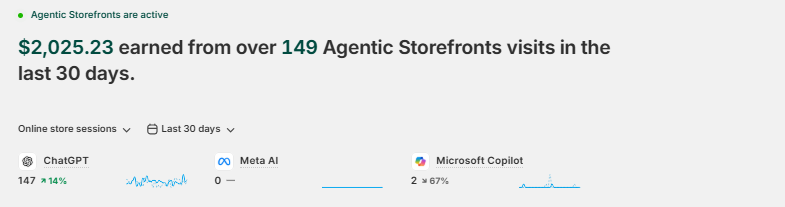
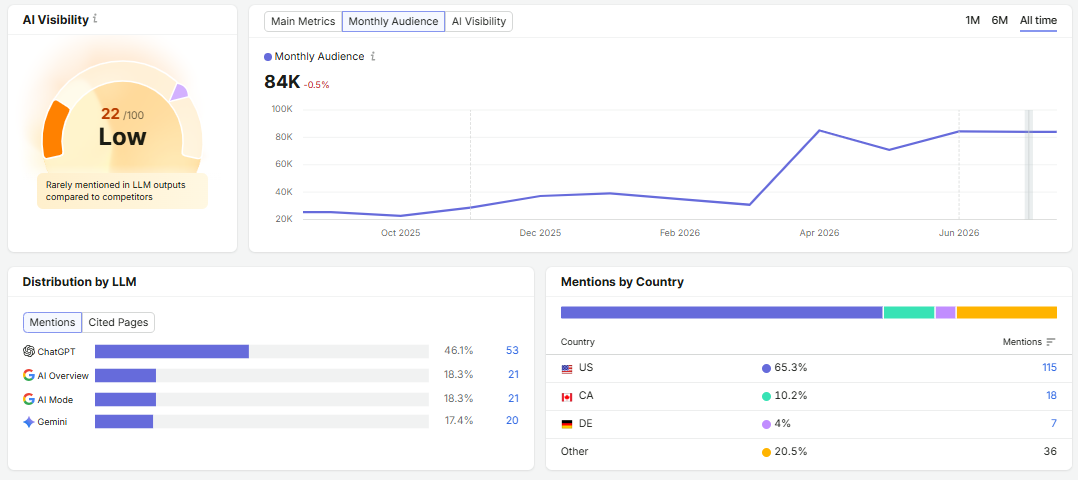
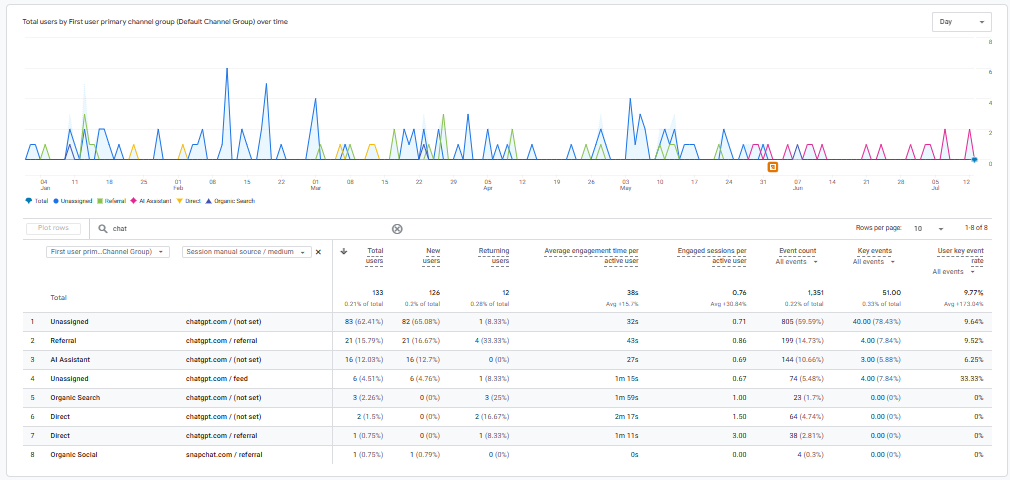
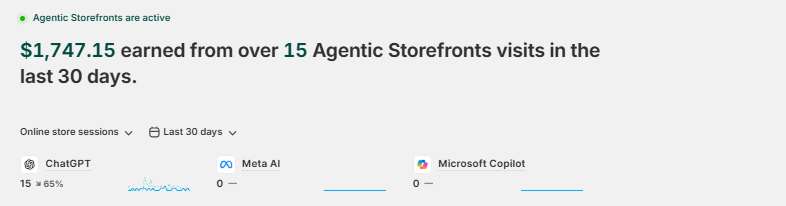
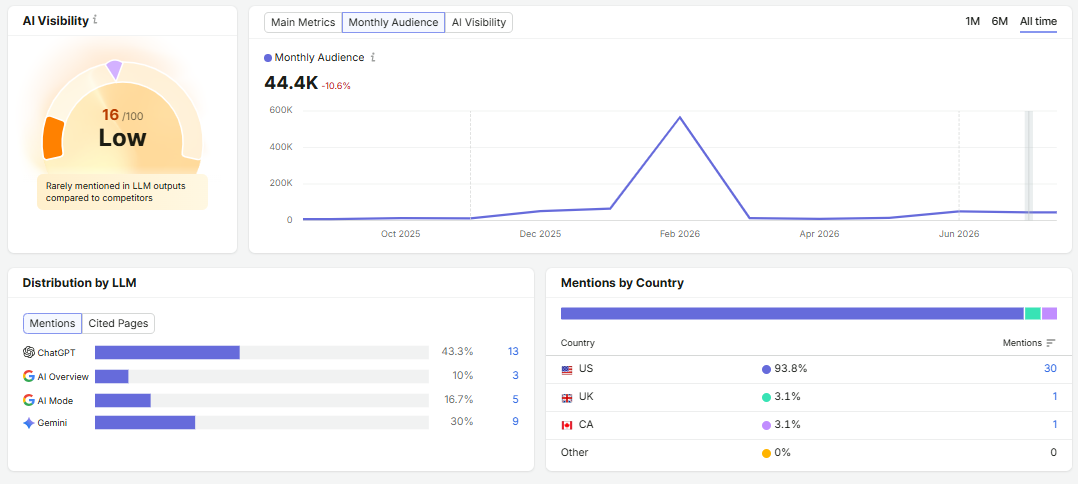
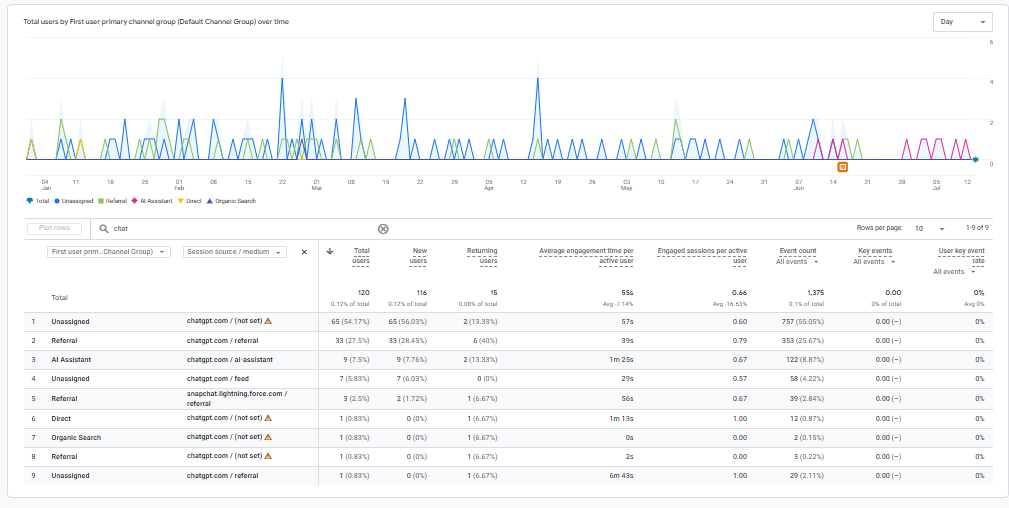
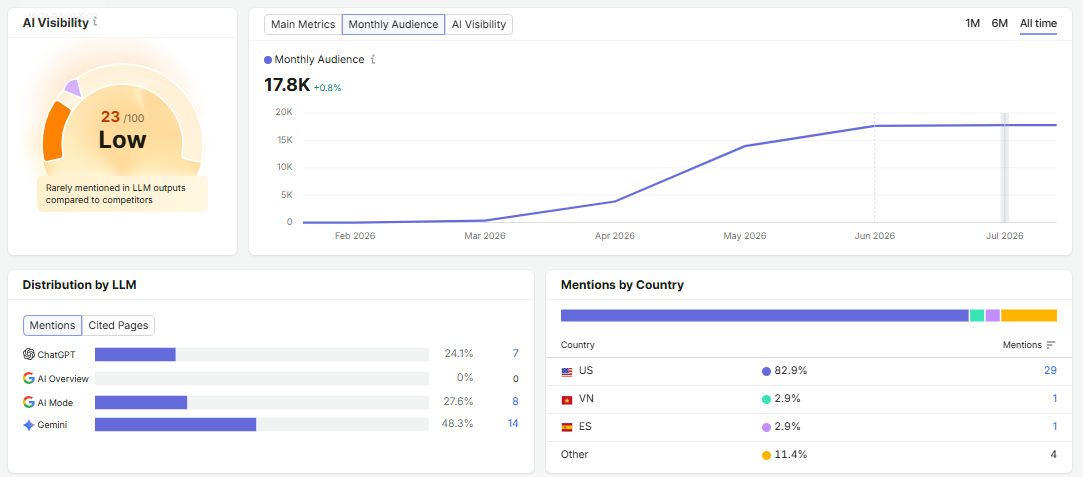
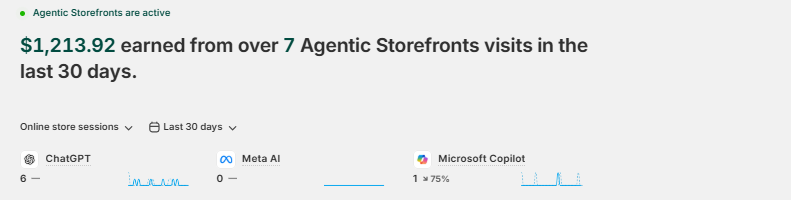
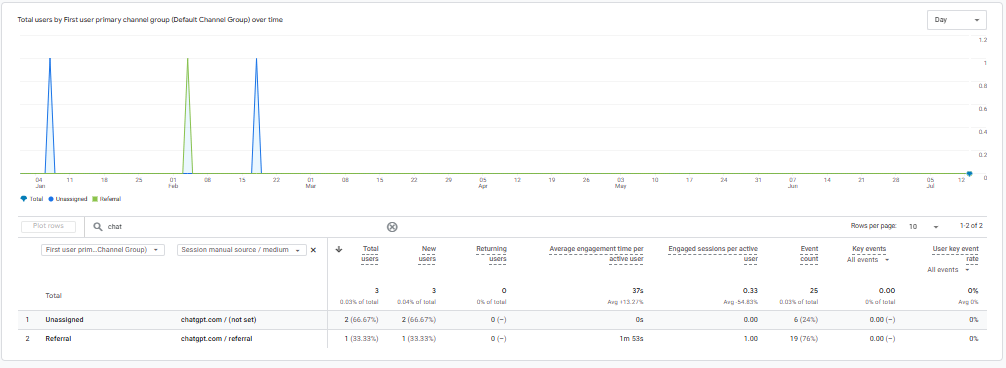
+Yes. We track brand mentions, citations, and cited pages per platform, monthly AI audience reach, and downstream signals — GA4 traffic from chatgpt.com and other assistants, plus Shopify Agentic Storefront sessions and revenue. Every engagement starts with a scored baseline so improvement is provable.
Do you work with Shopify?
+Shopify is our primary platform. We optimize merchant feeds, product data, and theme architecture, and we set clients up for Agentic Storefronts — the screenshots on this page are live Shopify dashboards from client stores.
Can this replace SEO?
+No — and be wary of anyone who says it can. Strong traditional SEO remains a foundation AI systems draw on. This work extends it to where decisions increasingly happen. Most clients run both, sharing the same content and data investments.
How often should optimization be updated?
+Continuously. Models retrain, shopping surfaces launch, and citation sources shift — what worked for ChatGPT last quarter may not hold after the next model release. We re-test prompts monthly and adjust as platforms evolve.